Wild Rocket @ Mount Emily
Hangout Hotel, 10a Upper Wilkie Road.
Singapore 228119.
Tel : 63399448
With the bulk of the festive cooking workshops finally over, N and I finally have sometime to catch a breather. We have missed one of our favourite weekend activities since last Oct due to the each other’s hectic schedule around this time of the year. We have read so many reviews of new restaurants launches in the past couple of months, some applauded, some trashed.
A firm believer to comment only on established restaurants, I seldom will want to write on a brand new establishment that is less than six months or a year old in order for them to sort out operation issues and fine tuning of menus. Hence when we could finally squeeze a Saturday evening out together, we chose to go to Chef Willin Low’s Wild Rocket @ Mount Emily which has been around for more than a year. It was our first experience but we have heard nothing but good raves about this place since its opening, both from media and friends. Stepping in after a nightmarish forty five minute jam, we still got our reserved table despite having an almost packed restaurant. A positive sign for the standard of food served is how I would perceive it as, considering the fickle minded of local customers here who seldom have loyalty to restaurants and are often spoilt for choices on where to go.
 N started with a Seared Tuna on Rocket Leaves which came with soy and ginger flavoured dressing. Keeping things simple, the flavours were clean and the fish was fresh enough to stand on its own though it wasn’t the kind of sashimi yellow fin tuna. The rocket leave provided a nice cushion for the tuna and its peppery nutty taste encored the taste of the whole dish with great harmony.
I opted for something more comforting in the form of a Duck Consomme with Salted Vegetables and Duck Confit Ravioli. Basically this dish is also known locally as Kiam Chye Duck Soup in the heartlands. Chef Willin probably got the inspiration from there. The soup arrived with a meaty aroma that gave me a sensation of slow simmering for maximum flavour extraction. This was concurred by the taste profile which had rich meaty notes on the palate further enhanced by the innovative wonton skin raviolis filled with tender duck confit. The whole experience leads me to crave for a light red wine to go with the bowl of soup.
 Before the main courses, we opted to share one of the Chef’s signatures which is a Laksa Pesto Linguine with Fresh Prawns. Initially visualizing it to be closer to our local hawkers’ version, it came with a direction closer to an Italian Pesto than a local one. Hence the sauce did not contain any notes of dried shrimp or coconut. The generous use of laksa leaves kept the associated colour of pesto and gave the sauce its signature aromatic fragrance. More importantly the chef got the texture of the pasta right at its al dente doneness. However the prawns could have fare slightly better for its freshness.
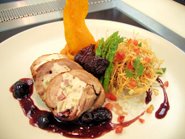
 Being winter now in Europe, I urge N to go for the Boned Stuffed Quail with Prunes which turn out to be a great option. The bacon wrapped bird was roasted to the right doneness and went very well with the dried prune compote and gelatinous rich demi glace. Against the sweet prunes, each morsel of salty wrapped bacon quail tasted simply divine!
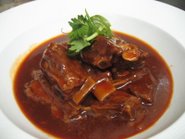
 Hungry for carbohydrates, I opted for a Miso Braised Pork Soft Bone Risotto which was a deceivingly flat looking dish ready to explode with great flavours on the palate. The soft bones tasted more like tendons to me and their gelatinous nature enriched the dimension of complexity in this dish while complimenting the creaminess of the cooked rice grains. The miso pungency was well balanced into the overall taste of the dish and flakes of dried chilies gave it a spicy kick with the background of soft tender braised rib meat. I could relate this dish to a spicy version of Nonya Babi Pongteh and found its overall taste very comforting and homely with a subtle hint of sophistication.
Desserts found us having a Black Sesame Paste with Vanilla Ice Cream and a Kuay Bulu Tiramisu. The black sesame paste was not as smooth if its was to be compared to Cantonese Chee Ma Wu but the slight grittiness from caramel bits was a good contrast to the smooth velvety ice cream. What captivated me was the bulu tiramisu. In place of sponge fingers, were balls of coffee soaked kuay bulu interspersed with a marscapone cheese mousse flavoured with marsala wine. Yes! That's the important part of a good tiramisu in terms of authenticity. The other winning factor was the chef certainly does
  know the right way to serve a tiramisu.ie to have the sponge and mousse naturally portioned in a bowl and a generous dust of cocoa powder. It’s that simple but many chefs get it wrong by trying too hard with other liqueurs like Kahlua, Tia Maria or making it into a sponge cake, and worse still getting the mousse set with gelatin.
Overall the meal was enjoyable and the service was attentive but not intrusive and dose of occasional humour. We like this place and it has gone on my list of restaurants worth a return visit in the near future.
A firm believer to comment only on established restaurants, I seldom will want to write on a brand new establishment that is less than six months or a year old in order for them to sort out operation issues and fine tuning of menus. Hence when we could finally squeeze a Saturday evening out together, we chose to go to Chef Willin Low’s Wild Rocket @ Mount Emily which has been around for more than a year. It was our first experience but we have heard nothing but good raves about this place since its opening, both from media and friends. Stepping in after a nightmarish forty five minute jam, we still got our reserved table despite having an almost packed restaurant. A positive sign for the standard of food served is how I would perceive it as, considering the fickle minded of local customers here who seldom have loyalty to restaurants and are often spoilt for choices on where to go.
N started with a Seared Tuna on Rocket Leaves which came with soy and ginger flavoured dressing. Keeping things simple, the flavours were clean and the fish was fresh enough to stand on its own though it wasn’t the kind of sashimi yellow fin tuna. The rocket leave provided a nice cushion for the tuna and its peppery nutty taste encored the taste of the whole dish with great harmony.I opted for something more comforting in the form of a Duck Consomme with Salted Vegetables and Duck Confit Ravioli. Basically this dish is also known locally as Kiam Chye Duck Soup in the heartlands. Chef Willin probably got the inspiration from there. The soup arrived with a meaty aroma that gave me a sensation of slow simmering for maximum flavour extraction. This was concurred by the taste profile which had rich meaty notes on the palate further enhanced by the innovative wonton skin raviolis filled with tender duck confit. The whole experience leads me to crave for a light red wine to go with the bowl of soup.
Before the main courses, we opted to share one of the Chef’s signatures which is a Laksa Pesto Linguine with Fresh Prawns. Initially visualizing it to be closer to our local hawkers’ version, it came with a direction closer to an Italian Pesto than a local one. Hence the sauce did not contain any notes of dried shrimp or coconut. The generous use of laksa leaves kept the associated colour of pesto and gave the sauce its signature aromatic fragrance. More importantly the chef got the texture of the pasta right at its al dente doneness. However the prawns could have fare slightly better for its freshness.Being winter now in Europe, I urge N to go for the Boned Stuffed Quail with Prunes which turn out to be a great option. The bacon wrapped bird was roasted to the right doneness and went very well with the dried prune compote and gelatinous rich demi glace. Against the sweet prunes, each morsel of salty wrapped bacon quail tasted simply divine! Hungry for carbohydrates, I opted for a Miso Braised Pork Soft Bone Risotto which was a deceivingly flat looking dish ready to explode with great flavours on the palate. The soft bones tasted more like tendons to me and their gelatinous nature enriched the dimension of complexity in this dish while complimenting the creaminess of the cooked rice grains. The miso pungency was well balanced into the overall taste of the dish and flakes of dried chilies gave it a spicy kick with the background of soft tender braised rib meat. I could relate this dish to a spicy version of Nonya Babi Pongteh and found its overall taste very comforting and homely with a subtle hint of sophistication.
Desserts found us having a Black Sesame Paste with Vanilla Ice Cream and a Kuay Bulu
 Tiramisu. The black sesame paste was not as smooth if its was to be compared to Cantonese Chee Ma Wu but the slight grittiness from caramel bits was a good contrast to the smooth velvety ice cream. What captivated me was the bulu tiramisu. In place of sponge fingers, were balls of coffee soaked kuay bulu interspersed with a marscapone cheese mousse flavoured with marsala wine. Yes! That's the important part of a good tiramisu in terms of authenticity. The other winning factor was the chef certainly does
  know the right way to serve a tiramisu.ie to have the sponge and mousse naturally portioned in a bowl and a generous dust of cocoa powder. It’s that simple but many chefs get it wrong by trying too hard with other liqueurs like Kahlua, Tia Maria or making it into a sponge cake, and worse still getting the mousse set with gelatin.
Overall the meal was enjoyable and the service was attentive but not intrusive and dose of occasional humour. We like this place and it has gone on my list of restaurants worth a return visit in the near future.


 Good strawberries?
 Size does matter
 Some of the classic dishes that we eat today have long been prepared with certain ingredients not only for taste and flavour reasons but food safety too. Some ingredients are able to help in holding prepared foods for a few days while others may allow longer periods of preservation in terms of months. Preservation with various types of ingredients can result in salty, spicy, sweet or sour taste sensations in the kind of foods we eat so it is up to the creative expertise of the chef to balance out taste on the palatte.


 One of the most heart wrenching things that is happening right now in Singapore are the exodus of good chefs that have chosen to leave this tiny red dot on the global map for greener pastures overseas. While we should be proud that our local chefs are making their mark overseas, what Singapore has lost is what the rest of the world especially China has gained. In the last ten years, we have lost prominent culinary talents like Justin Quek, the Aw Yong brothers, Jack and Martin, Eric Chiam, Jason Ong, Eric Ong, Jereme Leung, Kidd Leong, all which are home grown talents that have chosen to move beyond our shores. As the Chinese saying goes, “Bu shi Meng Long Bu Guo Jiang” or translated literally it means “only fierce and brave dragons will cross the mighty river”, the consolation is that we have people overseas whom we can be proud of as they showcase in their daily course of work, the mighty culinary prowess of this little island on the southernmost tip of continental Asia.
 Very kindly, we were given a table that allowed us to enjoy a panoramic view of the Bund as we dine.
 Here at the Whampoa Club, Chef Jereme has given this classic dish a modern twist which should just aptly rename the dish as Drunken Chicken with Shaoxing Wine Granita. Using the idea of
 Autumn is the season for Hairy Crabs those from Yang Teng Lake are reputed to be the best. Unlike the regular mud crab or Sri Lanka crab that is often appreciated for its chunky pieces of meat, these hairy crabs are highly sought after for a different aspect. While each crab does not yield as much meat as other varieties, it is the taste of its natural sweetness, extra creamy rich roe and fine textured meat that many diners go after for. Our crab oriented starter (Stir Fried Crabmeat with Edomame and Shimeji Mushrooms salad and Vinegar Pearls) came in three components. First there was a fine salad of fresh green soya beans, honshimeiji mushrooms and frisee. The crabmeat was cooked in a superior stock and came as a shot in tequila glass accompanied with a few delicate pearls of black vinegar on the side. The idea is to pour the crabmeat over the salad and add on the vinegar pearls, toss the salad gently and allow the pearls to melt in the warmth of the crabmeat. This creates a simple vinaigrette which dresses the whole salad that is greatly enhanced by the sweetness of the fine textured crabmeat. Very innovative, very seductive!

 N’s soup was a puree of pumpkin cooked in a flavourful stock. While most “Tang Yuan” or glutinous rice balls are often served as desserts with sweet fillings, Chef Jereme has chosen to have it done the savoury way filled with delicious crabmeat extracted from the hairly crabs in season. The result is a slightly sweet pumpkin soup that was well contrasted by the burst of savoury crab filling when u bite into it. Personal, I wished for a sprinkle of crispy fried prosciutto into the soup and the salty ham would have lift the body of the soup to that with a more umami character.
 The plum juicy lightly battered king prawns were coated with a wasabi flavoured mayonnaise that delivered that right punch of pungency. Accompanying the prawns was a fruit kebab of dragon fruit, mango and Watermelon that cleanses the palate as you move on to the ribs.
  The meaty ribs were coated in a bitter sweet sauce of dark chocolate, hints of mocha and spices. Flakes of roasted almonds were sprinkle on as garnish but the nuts actually help to bridge the taste of the sauce and meat together.
 A lighter way to cook the Shanghainese favourite fish , “Gui Yu” or Mandarin Fish as it is also commonly known locally is to gentle poach it and serve with a wine lees flavoured sauce. This lovely sauce put together with black fungus and bamboo shoots, has the sweet winey notes from the use of the wine lees as a key ingredient and its gentle lightness compliments the delicate thinly sliced poached fish fillets very well. A topping of finely shredded deep fried dried scallops balanced out the sweetness of the sauce with its umami and crispy character, uplifting the dish with a touch of finesse and sophistication.
 As in many traditional Chinese way of menu progression, we closed the savoury part of the menu with crispy noodles braised with fresh river shrimp and soya sauce jelly. The idea is to toss up the noodles with the soya sauce jelly allowing the fermented bean flavour of the soy sauce to be release into the noodles as the jelly melts. This prevents the loss of delicate aromas of the soya sauce which is often evaporated off by excessive heat during cooking if it were to be braised together with the noodles. The fine noodles were also a pleasurable experience on the palate as they soak up the delicious braising sauce.
 N was mentioning as the service staff reset our table that they seemed to know what dessert we were going to choose and as soon as she just finished on that, a complimentary dessert tasting platter was place before us and even Chef Hew popped by to say hello. This is indeed a much needed break from traditional Chinese restaurant culture where most of the times, the chefs hide in the kitchens and are often too shy to come out to interact with customers. Well, this could also be a chef to chef kind of camaraderie since I had already made my profession known in the email booking, but is always an honour to have chefs dinning in your restaurant more so if they had come all the way from overseas. I would feel the same way too if someday when I do own a restaurant and having the support of fellow chefs from everywhere. We truly appreciate the


 Chinese cuisine to the rest of the world is often well represented by schools of Cantonese, Sichuan, Beijing, Shanghainese and Hunan flavours. Beyond these five major schools of flavours, there are many other less discovered ethnic cuisines of China and among them, the ethnic cuisine of Manchuria. While it may not be a significant part of Chinese cuisine, it does have its own characteristics merits and specialities.
 We started with other items from the menu among which is a cold platter of Fen Pi with shredded raw vegetables with sesame sauce and oil oriented garlic soy dressing. Fen Pi is actually flat noodles made from mung bean flour and taste slippery smooth with slight suppleness. To appreciate this dish, the sesame pasted is first poured over the noodles and followed by the soy garlic dressing. Toss evenly with the finely shredded toppings of cucumbers, carrots, red cabbage, fresh coriander leaves and finely sliced soy marinated pork. We tasted the dish and the initial toss and found it to be very nice but upon N’s suggestion to drizzle some black vinegar, it really lifted the whole dish and brought it alive, perking up the flavours to a new level of deliciousness. Sometimes wife knows best.
 Dumplings are a part of Manchurian cuisine and also a speciality of this restaurant which offers more than 15 combinations of fillings. We chose the chef’s recommendations of having it done imperial style that has them lightly pan fried and covered with a paper thin wafer of rice starch. The dumplings were bursting with juicy bits of shrimp and Beijing cabbage. By dipping them into the fragrant black vinegar, it enhanced the pleasure of each morsel and cuts the greasy mouth feel. The sweetness of the Beijing cabbage was a great companion to the shrimp meat and gave the dumpling fillings a nice crunchy texture.
 Soon the roast lamb arrived with the meat all sliced up and re-cooked till almost dried up. It was a letdown for us as we anticipated juicy roasted leg but ended with torn shredded pieces of overcooked meat.
 Meat and mushrooms are a classic combination so we ordered a dish of sautéed sliced mushrooms as our final dish. The abalone textured like slices of Bai Ling Mushrooms were sautéed with a sauce that was made up with soy, ketchup and Maggi Seasoning sauces, accompanied with shoestring style strips of deep fried sweet potatoes. The lovage and soy notes of the sauce brought out the savouriness of the supple textured mushroom slices which was balance by the natural and crispiness of the deep fried sweet potatoes. We enjoyed this dish very much and appreciated the delicate balance of fungus, root vegetable and naturally fermented sauces.
 Would you pay for an air ticket just to eat hawker food in Penang? The answer for me is yes. Without doubt, I am willing to do so for hawker food that has fed more than three generations of families, that does not have ambitions to become a franchise multinational corporation, that believes in no shortcuts or the easy way out when it comes to preparation and ingredients, that is true to its own cooking and has maintained the standards of expectations from its loyal customers one generation after another. Here in Penang, hawker food is real culinary art seen in the form as the most basics of basics in the different dinning levels of food appreciation. The fact is the standard of the foods produced by the hawkers on this island off the coast of the mainland of peninsula Malaysia is so unmatched elsewhere that it becomes the culinary capital of the hawkers’ culture in South East Asia. There is passion, pride and dignity to prepare great tasty fare for the locals who formed the majority of their customers and are their strictest silent critics on standards of expectation. No hawker on Penang Island can survive for generations if they serve trashy food by relying on prepared sauces and spice pastes or taking the shortcuts with processed foods. The hawkers are not ambitious to offer wide varieties of foods, preferring instead to just focus a few items and perfecting the art of preparing them. Competition for customers is fierce and intense based on quality, hence the difference in standards from stall to stall is not such a wide gap like in Singapore. The winning stall scores by having an extra dollop of delicious sauce or generous toppings and garnishes that can result in an extra dimension of flavour.


 The wait is always worth it as u get a plate of deliciously lard laden fried koay teow that taste as good as it smells. While it is sinfully rich with the lard, without it, CKT is totally spineless in taste as the other condiments are secondary. The lard delivers the fragrance and lifts the synergy of flavours from other ingredients during the cooking process. The control of fire is equally important as the right temperature creates the wok charred notes and maintains the right level of moisture between noodles and ingredients.


 The most difficult part in preparation is the blending of prawn shells with the meat stock and an initial round of simmering, followed by straining the essence back into the simmering broth. This is something that is not practised in SG which explains the inferiority in taste as compared to the Penang version. This crucial step, though time consuming allows the full flavour of the prawn shells to be extracted out to the maximum, providing the important flavours notes with a strength that defines it as a benchmark of excellence. In the other areas of preparation, dried chillies is combined with pre-soaked dried shrimp and blended into a paste, which is then cook up with the prawn shells and caramelised rock sugar as the foundation of the stock before pork bones and skin are added to provide “meatiness” to the broth. With this winning stock base, the garnishing ingredients that can range from boiled pig skin, hardboiled eggs, spare ribs and peeled prawns completes the final picture of assembly to a well executed dish. Another trade secret share was most hawkers would rather use prawns caught from the sea than farmed freshwater varieties as it is believed that the prawns from sea are tastier due to the salinity of the environment that they live in.


 Very much like a cross between KL’s Dai Lok Mee and Singapore’s Fried Prawn Noodles. This version here at the Air Hitam Market is considered among to be one of the best for the obvious reasons. Each plate comes with a topping of crispy pork lard and its fragrance permeates the whole dish as u eat. Just like Char Koay Teow, this plate of Hokkien Char must be 100% lard driven recipe. The noodles are fried and braised briefly in a prawn and pork based stock. Dark soya sauc e is added and a variety of fish, squid and prawns are added in with some Chinese mustard greens. What really makes this dish outstanding here is the lip smacking kick ass sambal belachan. The chilli on its own is already very vibrant with flavours of lime, fermented shrimp and fresh coriander leaves blended in. Toss with the noodle and not only it tones down the “lardiness” of it, it stirs the entire plate of noodles alive with multiple flavour dimensions with a big “Oomph!”
 Penang has two versions, one crispy fried and the other a moist one but both win with the large size oysters that come with it. We tried the moist version at Bee Hooi Coffee Shop in Pulau Tikus which came glistening with juicy plump oysters. It looked by did not taste greasy on the palate and each morsel of egg, starch and oyster was heavenly yummy!






.jpg)