Saturday, May 19, 2012


Thursday, May 17, 2012

Sunday, March 21, 2010
Restaurant of the Nations Food Hotel Asia Culinary Challenge 2010
Dear Culinary Frens,
I am please to share with everyone here on the following event:
Singapore National Culinary Team Hot Cooking Presentation:
One of the key highlights of the upcoming Food and Hotel Asia 2010 show is the prestigious international acclaim Culinary Challenge 2010 formerly known as Salon Culinaire. Many of u have seen in my biodata that I was once a team member during my formative years as a chef. For 2010, the Singapore team will be competing once again with 9 other world renown national teams including the Swiss and Norwegian teams for the Battle of the Lion, which only the top three national teams will qualify to vie for.
The SNCT will be showcasing their hot tasting menu on Sat 27th March 7.30pm at Chef’s Daniels kitchen in Iluma (opp Bugis Junction). This 3 course menu will be opened to public for sit down sampling @ $45++ per pax and Chef Daniel Koh will be throwing in the canapés as well for early birds. If you ask me, I have tasted this menu 4times already with other ex-national team members like Chefs Eric Teo, Louis Tay and much fine tuning has been done for the team members each round. In a nut shell, it is almost perfect. In this tasting menu, u will get to experience every cooking technique in classical and modern history of cooking. From slow braise to elements of molecular gastronomy, it is once in a life time experience to dine with some of the best chefs in Singapore and this menu will never be offered in any restaurant and will never be back again once over. Hence I urge all of u here to give it a shot of what that would cost at least double in most other fine dining restaurants in Singapore. I will also be on site to share experiences and knowledge on what you taste in the menu.
The menu is as follows:
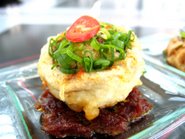
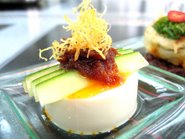
Lime Infused Confit of Norwegian Salmon, King Crab Terrine served with Watermelon Sorbet
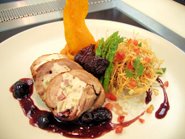
Roast Lamb Saddle with Tamarind-Kumquat Marmalade, Braised Lamb Neck Gateau topped with Puffed Barley, Manchego Polenta and Thyme Sauce
Almond Biscuit with Chocolate Banana Ice Nougat and Mango “Bomb” in Passion Fruit Snow Jelly Wrap
Reservations details are in the attached brochure and limited to 90pax only

I am please to share with everyone here on the following event:
Singapore National Culinary Team Hot Cooking Presentation:
One of the key highlights of the upcoming Food and Hotel Asia 2010 show is the prestigious international acclaim Culinary Challenge 2010 formerly known as Salon Culinaire. Many of u have seen in my biodata that I was once a team member during my formative years as a chef. For 2010, the Singapore team will be competing once again with 9 other world renown national teams including the Swiss and Norwegian teams for the Battle of the Lion, which only the top three national teams will qualify to vie for.
The SNCT will be showcasing their hot tasting menu on Sat 27th March 7.30pm at Chef’s Daniels kitchen in Iluma (opp Bugis Junction). This 3 course menu will be opened to public for sit down sampling @ $45++ per pax and Chef Daniel Koh will be throwing in the canapés as well for early birds. If you ask me, I have tasted this menu 4times already with other ex-national team members like Chefs Eric Teo, Louis Tay and much fine tuning has been done for the team members each round. In a nut shell, it is almost perfect. In this tasting menu, u will get to experience every cooking technique in classical and modern history of cooking. From slow braise to elements of molecular gastronomy, it is once in a life time experience to dine with some of the best chefs in Singapore and this menu will never be offered in any restaurant and will never be back again once over. Hence I urge all of u here to give it a shot of what that would cost at least double in most other fine dining restaurants in Singapore. I will also be on site to share experiences and knowledge on what you taste in the menu.
The menu is as follows:
Lime Infused Confit of Norwegian Salmon, King Crab Terrine served with Watermelon Sorbet
Roast Lamb Saddle with Tamarind-Kumquat Marmalade, Braised Lamb Neck Gateau topped with Puffed Barley, Manchego Polenta and Thyme Sauce
Almond Biscuit with Chocolate Banana Ice Nougat and Mango “Bomb” in Passion Fruit Snow Jelly Wrap
Reservations details are in the attached brochure and limited to 90pax only

Thursday, January 22, 2009
Below is a an extract from www.epicurious.com with regards to the food trend for 2009. Further on is my take for the same tune but the localized version.
Epicurious Predicts Top 10 Food Trends for 2009
by James Oliver Cury
With the dawn of a new presidency, a deepening recession, and a fine-dining culinary culture that sometimes veers into the impossibly surreal, soberness is setting into the food world. Gone are the behemoth restaurants, $1,000 omelets, and ice cream made of dehydrated chile flakes. Hallmarks of 2009 will include a return to families cooking together and eating at home more than they have in decades, a premium on high-quality, seasonal ingredients that provide good value, and an emphasis on simple food for the people, by the people.
1. "Value" is the new "Sustainable"These days, the economy dictates our cooking and shopping decisions: Bargains are in, no matter where they come from.
2. The Compost Pile is the new Flower GardenGrowing your own now refers to vegetables, not just herbs, and that will in turn help feed the gardener's compost pile. Live worm garnishes, however, will not make it to the house salad.
3. Peruvian is the new Thai You thought Peruvian cuisine was all about seviche, maybe? Guess again: Peru boasts culinary influences from Spanish, Basque, African, Chinese, Japanese, Italian, French, and British immigrants. Pisco Sour, anyone?
4. Noodle Bars are the new Sushi JointsWith some seafood being suspect or overfished and raw fish prices high, noodles make complete sense. If there's no ramen, udon, or soba shop in your neck of the woods, there will be soon.
5. Ginger is the new MintMove over, mojitos. Ginger beers and ginger cocktails (like the Ginger Rogers, Gin Gin Mule, and Ginger Smash) are bubbling up at places like The Violet Hour in Chicago, the Clock Bar in San Francisco, and Matsugen in New York.
6. Smoking is the new FryingYou know how everything tastes better fried? Well, almost everything tastes better smoked, too, and that includes cocktails. Bartenders are smoking their bourbons (Eben Freeman at Tailor, for example), and chefs, recognizing the national craze for BBQ, are smoking more than just salmon and ribs: nuts, salts, even smoked steelhead roe (at Chicago's Alinea). Who says smoking's bad for you?
7. Regional Roasters are the new StarbucksIt's come full circle. What started as a local coffee phenomenon migrated to other cities and turned Americans into java junkies. Then the chain overexpanded and overreached, and the little neighborhood coffee roasters thrive again, like Stumptown (Portland, OR), Bluebottle (San Francisco), and La Colombe (Philly).
8. Portland (Maine) is the new Portland (Oregon)Abundance of great chefs, restaurants, and local foodies? Check, check, and check. Want examples? Visit Five Fifty-Five, Hugo's, and Fore Street to start.
9. Rustic Food is the new Molecular Gastronomy Wacky-weird-science cuisine that requires fancy-schmancy equipment doesn't necessarily make food taste better, and more often than not it adds needless complexity (there are exceptions). Most importantly, no one really wants to do this at home. Expect to see comfort food stage a comeback. Again.
10. "Top-Rated" is the new "Critic's Pick"Power to the people; single critics are a dying breed. Why believe what one person says when you can read and reflect on what hundreds think? Don't believe us? Feel free to comment below!
The top 10 trends for the home cook and the restaurant-goer for the average Singaporean in 2009.
By Chef Eric Low
We do not have a new incoming PM. Molecular Gastronomy in the local culinary scene is almost on the verge of biting the dust. Our local MG maverick Chef Edward Voon has quit Aurum and gone back to the kitchens of the Tower Club. There might be some possibilities of a $100 omelette featuring a “mountain” of white truffle shavings in some die hard fine dinning restaurants here. With so many new ice cream parlours touting home made, self brewed, artisan designed ice creams, we may eventually see a sambal chilli hay bee hiam flavour. Hallmarks of 2009 will include a return to families cooking together, making a huge mess in the process and leaving all the wash up to the maid forcing her to sleep only at 1am. Singaporeans will be eating at home more than they have in decades, thanks to more ERP, higher transport costs and still having to pay service charges for lousy service. Hopefully our people will also understand that there is no such thing as cheap and good when it comes to food and be expected to pay a premium on high-quality, seasonal ingredients that provide good value, and just stay focus with regards to emphasis on simple food with quality ingredients.
1. "Value" is the new "Sustainable". These days, the economy dictates our cooking and shopping decisions: Bargains are in, no matter where they come from. Same as in SG. Sheng Siong will continue to be the number one supermarket choice of most Singaporeans offering much more in variety although prices are no longer that cheap as before. Fairprice may have more outlets but everything is so limited and standard that it never offers anything new and exciting to discover.
2. The Compost Pile is the new Flower Garden. Given that about 70% of Singaporeans live in HDB, it is almost impossible to grow your own vegetables even in the balcony if u are lucky enough to have one. With Singaporeans struggling to keep their jobs in this dire economy, growing vegetables is not one of the options for recreational activities. However to be eco friendly, the government continues to encourage all citizens to drink Newwater distributed for free in grassroots, charity and lousy budgeted events.
3. Spanish is the new Italian, Pasta to make way for Paella….. Yes Spanish cuisine is trickling in, although we need much more help from AVA to allow more Spanish produce and products to come in at more decent price levels. We love to have beyond Serrano Ham, smoked paprika, chorizos, padron peppers, mojitos, calbrese cheese, manchego cheese, sherry wine, mallorca almonds……
4. Gourmet Pasta Piazzas are the new Sushi JointsWe have too much local noodles as in hawker stalls around. We already have artisan ramen, udon, or soba shops, now we badly need places where u can get pasta in your neighbourhood hawker centers cooked the real Italian way and not some modified localized version.We like it to be “Al Dente” and not drowning in too much diluted sauce. Hopefully there will be soon when more retrenched chefs turn entrepreneurs.
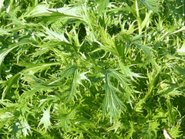
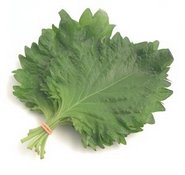
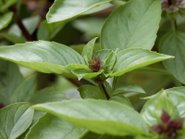
5. Basil and Saw Leaf is the new Mint. We have been drinking Teh Halia for donkey years, ginger is nothing new and exciting for us. But much as we are in the box, we should get out and start exploring other tropical flavour bursting herbs beyond what we already know as in coriander and spring onions. Basil is the in-coming thing for cocktails and saw leaf is added to local salads in place of coriander.
6. Smoking is the new Frying. We still like our goreng pisang and Yew Char Kway when we eat out of home. Yes, healthier choice label products should be one of our choices when we shop or eat. Call us hypocrites if u care, however at the end of the day, the message is that taste is still important and food businesses should know that by getting a healthier choice label on your product does not mean u will have the best selling product on hand. As on smoked foods, of course we love BBQ Sauce, Sausages and Bacon. We can’t smoke our foods at home but we love to try anything that is smoked as long as it is given out free in supermarkets, food shows and cooking workshops by chefs.
7. Ya Kun and Killiney are still the new Starbucks. It's come full circle. What started as a local coffee phenomenon migrated to other countries and turned their citizens into kaya junkies. With the economic crunch, people are down sizing and opting for better value options. About five bucks at Yakun or Killiney gets u two toasts, a pair of soft boiled eggs and coffee far more nutritious and value than just one medium frappucino at Starbucks.
8. Bukit Timah (Old Fire Station) is the new Bukit Timah (Greenwood Ave). Vacated post colonial properties usually end up as new business opportunities for great chefs to start new restaurants, and local foodies will continue to have an endless choice of restaurants serving the same Chilean seabass (codfish), Wagyu Beef and Kurobuta Pork Belly….usually ending with tiramisu or a molten lava chocolate cake.
9. Rustic Food is the new Molecular Gastronomy Can’t agree more on this. Who wants to eat Nasi Lemak out of a test tube? Or to have your delicious roast beef turned into a morsel of ice cream that doesn’t give the satisfaction of beefy meatiness. Most importantly, no one really wants to pay through the nose again and again for a 13 course menu sitting on a wheel chair in some operating theatre set up with a reference taken from SGH. Plus the feeling that it was some weird scientist trying to feed u instead of a chef. Expect to see chicken curry and kong bak pau stage a comeback again.
10. "Top-Rated" is the new "Critic's Pick"Power to the people; Yes we all agree on this. Why believe what one person says when you can read and reflect on what hundreds think? It is even worse when the one person who is suppose to do a professional commenting is not a qualified F&B professional in any field, no F&B job experience to relate to and does not really know what is called the interest of fairness in restaurant review. eg. Doing a write up on a new establishment within two weeks of opening or soliciting for free food based on the excuse of writing a publicity review. Trust me, we the F&B professionals know who the guilty parties are. Don't believe us? Feel free to comment below!
Epicurious Predicts Top 10 Food Trends for 2009
by James Oliver Cury
With the dawn of a new presidency, a deepening recession, and a fine-dining culinary culture that sometimes veers into the impossibly surreal, soberness is setting into the food world. Gone are the behemoth restaurants, $1,000 omelets, and ice cream made of dehydrated chile flakes. Hallmarks of 2009 will include a return to families cooking together and eating at home more than they have in decades, a premium on high-quality, seasonal ingredients that provide good value, and an emphasis on simple food for the people, by the people.
1. "Value" is the new "Sustainable"These days, the economy dictates our cooking and shopping decisions: Bargains are in, no matter where they come from.
2. The Compost Pile is the new Flower GardenGrowing your own now refers to vegetables, not just herbs, and that will in turn help feed the gardener's compost pile. Live worm garnishes, however, will not make it to the house salad.
3. Peruvian is the new Thai You thought Peruvian cuisine was all about seviche, maybe? Guess again: Peru boasts culinary influences from Spanish, Basque, African, Chinese, Japanese, Italian, French, and British immigrants. Pisco Sour, anyone?
4. Noodle Bars are the new Sushi JointsWith some seafood being suspect or overfished and raw fish prices high, noodles make complete sense. If there's no ramen, udon, or soba shop in your neck of the woods, there will be soon.
5. Ginger is the new MintMove over, mojitos. Ginger beers and ginger cocktails (like the Ginger Rogers, Gin Gin Mule, and Ginger Smash) are bubbling up at places like The Violet Hour in Chicago, the Clock Bar in San Francisco, and Matsugen in New York.
6. Smoking is the new FryingYou know how everything tastes better fried? Well, almost everything tastes better smoked, too, and that includes cocktails. Bartenders are smoking their bourbons (Eben Freeman at Tailor, for example), and chefs, recognizing the national craze for BBQ, are smoking more than just salmon and ribs: nuts, salts, even smoked steelhead roe (at Chicago's Alinea). Who says smoking's bad for you?
7. Regional Roasters are the new StarbucksIt's come full circle. What started as a local coffee phenomenon migrated to other cities and turned Americans into java junkies. Then the chain overexpanded and overreached, and the little neighborhood coffee roasters thrive again, like Stumptown (Portland, OR), Bluebottle (San Francisco), and La Colombe (Philly).
8. Portland (Maine) is the new Portland (Oregon)Abundance of great chefs, restaurants, and local foodies? Check, check, and check. Want examples? Visit Five Fifty-Five, Hugo's, and Fore Street to start.
9. Rustic Food is the new Molecular Gastronomy Wacky-weird-science cuisine that requires fancy-schmancy equipment doesn't necessarily make food taste better, and more often than not it adds needless complexity (there are exceptions). Most importantly, no one really wants to do this at home. Expect to see comfort food stage a comeback. Again.
10. "Top-Rated" is the new "Critic's Pick"Power to the people; single critics are a dying breed. Why believe what one person says when you can read and reflect on what hundreds think? Don't believe us? Feel free to comment below!
The top 10 trends for the home cook and the restaurant-goer for the average Singaporean in 2009.
By Chef Eric Low
We do not have a new incoming PM. Molecular Gastronomy in the local culinary scene is almost on the verge of biting the dust. Our local MG maverick Chef Edward Voon has quit Aurum and gone back to the kitchens of the Tower Club. There might be some possibilities of a $100 omelette featuring a “mountain” of white truffle shavings in some die hard fine dinning restaurants here. With so many new ice cream parlours touting home made, self brewed, artisan designed ice creams, we may eventually see a sambal chilli hay bee hiam flavour. Hallmarks of 2009 will include a return to families cooking together, making a huge mess in the process and leaving all the wash up to the maid forcing her to sleep only at 1am. Singaporeans will be eating at home more than they have in decades, thanks to more ERP, higher transport costs and still having to pay service charges for lousy service. Hopefully our people will also understand that there is no such thing as cheap and good when it comes to food and be expected to pay a premium on high-quality, seasonal ingredients that provide good value, and just stay focus with regards to emphasis on simple food with quality ingredients.
1. "Value" is the new "Sustainable". These days, the economy dictates our cooking and shopping decisions: Bargains are in, no matter where they come from. Same as in SG. Sheng Siong will continue to be the number one supermarket choice of most Singaporeans offering much more in variety although prices are no longer that cheap as before. Fairprice may have more outlets but everything is so limited and standard that it never offers anything new and exciting to discover.
2. The Compost Pile is the new Flower Garden. Given that about 70% of Singaporeans live in HDB, it is almost impossible to grow your own vegetables even in the balcony if u are lucky enough to have one. With Singaporeans struggling to keep their jobs in this dire economy, growing vegetables is not one of the options for recreational activities. However to be eco friendly, the government continues to encourage all citizens to drink Newwater distributed for free in grassroots, charity and lousy budgeted events.
3. Spanish is the new Italian, Pasta to make way for Paella….. Yes Spanish cuisine is trickling in, although we need much more help from AVA to allow more Spanish produce and products to come in at more decent price levels. We love to have beyond Serrano Ham, smoked paprika, chorizos, padron peppers, mojitos, calbrese cheese, manchego cheese, sherry wine, mallorca almonds……
4. Gourmet Pasta Piazzas are the new Sushi JointsWe have too much local noodles as in hawker stalls around. We already have artisan ramen, udon, or soba shops, now we badly need places where u can get pasta in your neighbourhood hawker centers cooked the real Italian way and not some modified localized version.We like it to be “Al Dente” and not drowning in too much diluted sauce. Hopefully there will be soon when more retrenched chefs turn entrepreneurs.
5. Basil and Saw Leaf is the new Mint. We have been drinking Teh Halia for donkey years, ginger is nothing new and exciting for us. But much as we are in the box, we should get out and start exploring other tropical flavour bursting herbs beyond what we already know as in coriander and spring onions. Basil is the in-coming thing for cocktails and saw leaf is added to local salads in place of coriander.
6. Smoking is the new Frying. We still like our goreng pisang and Yew Char Kway when we eat out of home. Yes, healthier choice label products should be one of our choices when we shop or eat. Call us hypocrites if u care, however at the end of the day, the message is that taste is still important and food businesses should know that by getting a healthier choice label on your product does not mean u will have the best selling product on hand. As on smoked foods, of course we love BBQ Sauce, Sausages and Bacon. We can’t smoke our foods at home but we love to try anything that is smoked as long as it is given out free in supermarkets, food shows and cooking workshops by chefs.
7. Ya Kun and Killiney are still the new Starbucks. It's come full circle. What started as a local coffee phenomenon migrated to other countries and turned their citizens into kaya junkies. With the economic crunch, people are down sizing and opting for better value options. About five bucks at Yakun or Killiney gets u two toasts, a pair of soft boiled eggs and coffee far more nutritious and value than just one medium frappucino at Starbucks.
8. Bukit Timah (Old Fire Station) is the new Bukit Timah (Greenwood Ave). Vacated post colonial properties usually end up as new business opportunities for great chefs to start new restaurants, and local foodies will continue to have an endless choice of restaurants serving the same Chilean seabass (codfish), Wagyu Beef and Kurobuta Pork Belly….usually ending with tiramisu or a molten lava chocolate cake.
9. Rustic Food is the new Molecular Gastronomy Can’t agree more on this. Who wants to eat Nasi Lemak out of a test tube? Or to have your delicious roast beef turned into a morsel of ice cream that doesn’t give the satisfaction of beefy meatiness. Most importantly, no one really wants to pay through the nose again and again for a 13 course menu sitting on a wheel chair in some operating theatre set up with a reference taken from SGH. Plus the feeling that it was some weird scientist trying to feed u instead of a chef. Expect to see chicken curry and kong bak pau stage a comeback again.
10. "Top-Rated" is the new "Critic's Pick"Power to the people; Yes we all agree on this. Why believe what one person says when you can read and reflect on what hundreds think? It is even worse when the one person who is suppose to do a professional commenting is not a qualified F&B professional in any field, no F&B job experience to relate to and does not really know what is called the interest of fairness in restaurant review. eg. Doing a write up on a new establishment within two weeks of opening or soliciting for free food based on the excuse of writing a publicity review. Trust me, we the F&B professionals know who the guilty parties are. Don't believe us? Feel free to comment below!
Sunday, December 07, 2008
New Age Thai
33 Hyderabad Road
Singapore 119578
tel:+65 6476 9000
tel:+65 6476 9000
Touted as one of the most high end Thai restaurant, its location wasn’t in some swanky posh address. Rather it has to distinguish itself and also to justify the higher end prices or the more affluent crowds won’t bite. The place I am talking about is almost a year old modern Thai restaurant Kha, located at the Hort Park off Alexandria Road. Notice the word “modern” Thai as I define it to be which is what it is to distinguished itself from being just another Thai restaurant. Most purists would cringe to know that helming the kitchen is not a native Thai but a hot young blooded Aussie chef who has spent a considerable amount of time and career in the land of smiles. Maybe this is why the owners creatively conceptualize the modern Thai theme about the restaurant.
It is quite a challenge in trying to understand the cooking philosophy of the chef in this kind of concept restaurant especially when the cuisine and heritage of the chef do not match. But good honest cooking is not really defined by your culture or race. It’s about the chef’s passion for it.
Since its all about “modern Thai”, then N and I decided to pick on dishes that define it as there are also other classical Thai favourites like Tom Yum Goong, Massuman Curry and Mango with Sticky Rice for the traditional diehards. If we were to pick on these, then it would defeat the purpose of doing modern Thai.
Before I start on the food, let me comment on the two mocktails we ordered. I am not a fan of beverages in restaurants because my general sentiment is that it is a rip off in most places. I am not saying that the beverages are cheap here but rather they are not. However, I do admire the culinary art part of preparing the special mocktails and their combination of flavours. N took on a nice smoothie of blended lychees, pomelo and citrus which gave a refreshing stir of life on palate. My Basilistic mocktail came with a crush of fresh Thai basil, mango and fresh raspberries. It’s a wonderful combination of smell, colour and aromas.


It is quite a challenge in trying to understand the cooking philosophy of the chef in this kind of concept restaurant especially when the cuisine and heritage of the chef do not match. But good honest cooking is not really defined by your culture or race. It’s about the chef’s passion for it.
Since its all about “modern Thai”, then N and I decided to pick on dishes that define it as there are also other classical Thai favourites like Tom Yum Goong, Massuman Curry and Mango with Sticky Rice for the traditional diehards. If we were to pick on these, then it would defeat the purpose of doing modern Thai.
Before I start on the food, let me comment on the two mocktails we ordered. I am not a fan of beverages in restaurants because my general sentiment is that it is a rip off in most places. I am not saying that the beverages are cheap here but rather they are not. However, I do admire the culinary art part of preparing the special mocktails and their combination of flavours. N took on a nice smoothie of blended lychees, pomelo and citrus which gave a refreshing stir of life on palate. My Basilistic mocktail came with a crush of fresh Thai basil, mango and fresh raspberries. It’s a wonderful combination of smell, colour and aromas.


Dinner started with two appetizers, one which was a pair of crab and prawn cakes on a bed of green mango salad (Thod Man Poo). The pair of crispy breaded cakes was made with a combination of grounded shrimp and crabmeat was dressed with yoghurt and a dollop of sweet chilli sauce similar to the type served with roast chicken. Crispy yet still moist in the center, the cakes were pretty tasty with just the sweet chili sauce making the yogurt seemed a bit redundant. Then as we got on to the other appetizer which came highly recommended on the Chef’s special menu, we found ourselves with the yoghurt again. Though the cut of Wagyu beef was perfectly grilled, the red curry spices did not really come through on impact. By now I kind of figure the reason for the presence of the yoghurt on the two dishes. The standard salad dressing for Thai salads is usually made with a combination of palm sugar, fish sauce, lime juice plus the spice elements. Here at Kha, it comes with rather subtle nature than that of a strong impact given the extreme pungency of fish sauce and sourness of the lime juice. Perhaps is this done to allow the natural taste of the fresh ingredients to prevail than rather allowing it to be overpowered by the dressing? The yoghurt acts as a bridge to rein in the meat and salad with the subtle dressing.
 In between the courses, came the fun element, which is a complimentary puffed rice crackers with a creamy coconut flavoured dip, other wise commonly known as Khao Tang Na Tang. With the flavourful mocktails, they
 make wonderful small bites on the side.
Besides the usual offerings of hot and sour soups in the usual Thai restaurants, we were delighted to discover that Kha also offered a perennial Thai-Chinese favourite, the ubiquitous Fish Maw Soup with Quail Eggs and Seafood. The slightly thickened broth was quite flavourful and complimented the soft braised fish maw very well.


 In between the courses, came the fun element, which is a complimentary puffed rice crackers with a creamy coconut flavoured dip, other wise commonly known as Khao Tang Na Tang. With the flavourful mocktails, they
 make wonderful small bites on the side.
Besides the usual offerings of hot and sour soups in the usual Thai restaurants, we were delighted to discover that Kha also offered a perennial Thai-Chinese favourite, the ubiquitous Fish Maw Soup with Quail Eggs and Seafood. The slightly thickened broth was quite flavourful and complimented the soft braised fish maw very well.


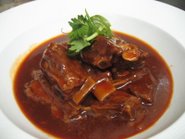
We took two specials for the mains as we wanted to move away from traditional recipes to new flavours and dimensions. I had a spicy Yellow Curry Braised Pork Ribs with Roasted Egg Plant and Straw Mushrooms while N chose a Grilled Filet of Salmon with a Fine Herb Salad and a savoury spicy sauce which I suspected was concocted from fermented soy beans. The salmon was a nice fresh slab that had been grilled slightly underdone like the way I preferred. It was melt in the mouth delicious although I would have preferred a slightly more pungent sauce to go with the fatty fish. The ribs were well braised and the curry was very fragrant but a tad too spicy for me.
 As we were sharing a plate of Phad Thai for tradition sake, I did not ordered rice to go with the curry which I kind of regret.
The phad thai was a luxurous version of what we normally have. King size prawns, a lovely banana blossom salad on the side. I must say that the top notch ingredients used in the dishes we ordered so far made us understood what the higher prices mean in terms of a return of value.
 Dessert was a teaser, we wanted to move away from mangoes and sticky rice but something made with black glutinous rice caught my eye on the menu we decided to go with that. It was a fuse of Aussie Thai ideas with the sticky date pudding given a dose of black glutinous rice in a molasses flavoured pudding. The richness was cut by a sweet sour tamarind sauce and accompanied by one of the tastiest home made mango ice creams that I haven’t tasted for a while.
For the price, the ambience (actually it was trashed by people (read: Singaporeans) who just can’t respect the sophistication of a restaurant by turning up in t-shirts and Bermudas shorts) and unique garden location, its worth a revisit for to savour the creativity of Chef David Hamilton creations as long as u avoid going in with expectations of the classics.
As we were sharing a plate of Phad Thai for tradition sake, I did not ordered rice to go with the curry which I kind of regret.The phad thai was a luxurous version of what we normally have. King size prawns, a lovely banana blossom salad on the side. I must say that the top notch ingredients used in the dishes we ordered so far made us understood what the higher prices mean in terms of a return of value.
Dessert was a teaser, we wanted to move away from mangoes and sticky rice but something made with black glutinous rice caught my eye on the menu we decided to go with that. It was a fuse of Aussie Thai ideas with the sticky date pudding given a dose of black glutinous rice in a molasses flavoured pudding. The richness was cut by a sweet sour tamarind sauce and accompanied by one of the tastiest home made mango ice creams that I haven’t tasted for a while.For the price, the ambience (actually it was trashed by people (read: Singaporeans) who just can’t respect the sophistication of a restaurant by turning up in t-shirts and Bermudas shorts) and unique garden location, its worth a revisit for to savour the creativity of Chef David Hamilton creations as long as u avoid going in with expectations of the classics.
Sunday, October 05, 2008
Changing Appetites
In China, specific regions are recognised for their outstanding characteristics. For example there is a common saying that an ideal life would be to born in Suzhou, live in Hangzhou, eat in Guangzhou and to pass on in Liuzhou. Each region is famous for a certain character and Guangzhou with its Cantonese cuisine is specifically recognised as the forerunner for the evolution of Chinese Cuisine around the world. Significantly, it has become a fundamental basis for many chinese chefs to learn the culinary techniques of this cuisine. The region with its fertile plains, bountiful coastal waters and culinary expertise is indeed blessed with its unique recognition as being the culinary paradise of China.
Some restaurants in Guangzhou dates back to more than a hundred years ago and they have become the icons of the local dinning culture. Restaurants like Guangzhou Restaurant广州酒楼, Tao Tao Ju陶陶居, Lian Xiang Lou莲香楼evolve from being tea houses in the earlier days to full fledge Chinese restaurants today. The local people eat 5 meals a day. Morning tea, lunch, afternoon tea, dinner and night tea. These restaurants are opened from 6am each morning and do not close till past midnight. Their total sitting capacity each boast of the the hundreds and thousands per dining session and during peak seasons, it is a non stop flow of chaos. Most people come for dian xin items and the regular chinese wedding banquets can see more than 6-8 families at times celebrating the union of bliss of their love ones. One can imagine the brigade of chefs preparing all the foods in the extensive menus can easily run into a thousand based on the rotating shifts and the number of masterchefs wielding their rolling pins, cleavers, woks and roasting skewers depending on their areas of speciality all united under the watchful eye of the grand culinary masterchef who probably has spent more time in the kitchen than anywhere else in his entire life time. Guangzhou Restaurant, founded in 1925, has itself has contributed to the birth of quite a few of the region, HK and Macau's Chinese masterchefs. Tao Tao Ju has a longer history dating back to its birth in 1880 with its dim sum touted as the best among the three while Lian Xiang Lou boasts of the best tasting Chinese pastries among the three.
By now you probably would have been reading in awe of these three restaurants and must be wondering how their food tastes? The answer is a big disappointment. Substandard fare i would say. The region of Guangzhou must have exported all her best chefs to around the world leaving the mediocore ones behind in the last hundred years teaching on the next generation substandard knowledge. I am not comparing based on the individual chefs best capibility but as in providing a general standard of dinning service and taste to the man in the street. N, myself and mum thought we would find the best experiences in the culinary paradise from these historic restaurants but we were let down by all three places. What is the problem?Are we picky? Not at all. We all scratched our heads after visiting all these three places and realised that many of these historic Chinese restaurants are still stuck in their historic outfits of taste and service standards. In other words, as chinese restaurants and their customers demand in the rest of the world modernise in decor, dinning etiquettes, menus and service standards, these restaurants were left behind with their ever faithful locals with their own clocks coming to a total standstill of the yesteryears. Comparing with traditional cantonese restaurants like Red Star and Dragon Gate in Singapore, Hong Kong Flower Lounge, Yank Sing and Fook Lam in San Francisco and Red Emperor in Melbourne, the three of them are not able to match on food just alone. And these overseas Cantonese restaurants on their own are not even considered as the best in their own respective adopted countries, but rather we were just comparing apples with apples.
As for service, don't even bother in these three restaurants. In peak dinning hours, as many as three groups of dinning guests can be seated on one big dinning table. The bosses don't get it. With smaller families in recent years, they should start having more smaller tables to accomodate the growth in this segment of dinning customers. Rather it has been accepted to the local dining culture and the whole process goes like this if u are in groups of 2-4pax. Chances are u will be seated with another group sharing the same big table and lazy susan, and should there still be an available space, they will slot in the regular lone ranger as well. It's like the table will have PAP, WP, SDP and maybe an independent candidate to add on to the chaos of the foods served. I am not against table sharing but not at the expense of maximising all available space and sacrificing the customers dining comfort. The dinning experience is totally ruined if u represent the non smoking party because the rest of them will be happily puffing away their Double Happiness cigarettes before, during and after the course of their dinners including those in the neighbouring tables.
Btw, did I mention that we were able to hear all their topics on family, party and work politics thoughout our entire meal with a shower blessing of saliva thrown in for good measure??
Some restaurants in Guangzhou dates back to more than a hundred years ago and they have become the icons of the local dinning culture. Restaurants like Guangzhou Restaurant广州酒楼, Tao Tao Ju陶陶居, Lian Xiang Lou莲香楼evolve from being tea houses in the earlier days to full fledge Chinese restaurants today. The local people eat 5 meals a day. Morning tea, lunch, afternoon tea, dinner and night tea. These restaurants are opened from 6am each morning and do not close till past midnight. Their total sitting capacity each boast of the the hundreds and thousands per dining session and during peak seasons, it is a non stop flow of chaos. Most people come for dian xin items and the regular chinese wedding banquets can see more than 6-8 families at times celebrating the union of bliss of their love ones. One can imagine the brigade of chefs preparing all the foods in the extensive menus can easily run into a thousand based on the rotating shifts and the number of masterchefs wielding their rolling pins, cleavers, woks and roasting skewers depending on their areas of speciality all united under the watchful eye of the grand culinary masterchef who probably has spent more time in the kitchen than anywhere else in his entire life time. Guangzhou Restaurant, founded in 1925, has itself has contributed to the birth of quite a few of the region, HK and Macau's Chinese masterchefs. Tao Tao Ju has a longer history dating back to its birth in 1880 with its dim sum touted as the best among the three while Lian Xiang Lou boasts of the best tasting Chinese pastries among the three.
By now you probably would have been reading in awe of these three restaurants and must be wondering how their food tastes? The answer is a big disappointment. Substandard fare i would say. The region of Guangzhou must have exported all her best chefs to around the world leaving the mediocore ones behind in the last hundred years teaching on the next generation substandard knowledge. I am not comparing based on the individual chefs best capibility but as in providing a general standard of dinning service and taste to the man in the street. N, myself and mum thought we would find the best experiences in the culinary paradise from these historic restaurants but we were let down by all three places. What is the problem?Are we picky? Not at all. We all scratched our heads after visiting all these three places and realised that many of these historic Chinese restaurants are still stuck in their historic outfits of taste and service standards. In other words, as chinese restaurants and their customers demand in the rest of the world modernise in decor, dinning etiquettes, menus and service standards, these restaurants were left behind with their ever faithful locals with their own clocks coming to a total standstill of the yesteryears. Comparing with traditional cantonese restaurants like Red Star and Dragon Gate in Singapore, Hong Kong Flower Lounge, Yank Sing and Fook Lam in San Francisco and Red Emperor in Melbourne, the three of them are not able to match on food just alone. And these overseas Cantonese restaurants on their own are not even considered as the best in their own respective adopted countries, but rather we were just comparing apples with apples.
As for service, don't even bother in these three restaurants. In peak dinning hours, as many as three groups of dinning guests can be seated on one big dinning table. The bosses don't get it. With smaller families in recent years, they should start having more smaller tables to accomodate the growth in this segment of dinning customers. Rather it has been accepted to the local dining culture and the whole process goes like this if u are in groups of 2-4pax. Chances are u will be seated with another group sharing the same big table and lazy susan, and should there still be an available space, they will slot in the regular lone ranger as well. It's like the table will have PAP, WP, SDP and maybe an independent candidate to add on to the chaos of the foods served. I am not against table sharing but not at the expense of maximising all available space and sacrificing the customers dining comfort. The dinning experience is totally ruined if u represent the non smoking party because the rest of them will be happily puffing away their Double Happiness cigarettes before, during and after the course of their dinners including those in the neighbouring tables.
Btw, did I mention that we were able to hear all their topics on family, party and work politics thoughout our entire meal with a shower blessing of saliva thrown in for good measure??
Thursday, September 18, 2008
Big Flavours in Toa Payoh
Chua Seng Huat Seafood Restaurant
No 9 Toa Payoh Industrial Park
Lorong 8 Toa Payoh
Tel 62540896
In the twenty years that I have been a chef, there is a Cze Char (dishes cook upon order) restaurant whose owner’s dishes were exceptionally memorable to me. I used to take the opportunities of enjoying his dishes for granted. The story about it is because the owner of this restaurant is a key sponsor to a few of the Teochew clans and temples associations that I belong to and hence whenever there are festive celebrations or funerals, he is sure to be the one there feeding everyone regardless of the occasion. The restaurant that I am talking about here is Chua Seng Huat located at the industrial canteen of Lorong 8 Toa Payoh and the person I refer to is Seng Chong “Chek” or uncle as we address him in Teochew. This unpretentious boss of the Cze Char has the pattern of the “chow ah chek” uncles like those u see hanging around Singapore Pools Turf Club betting outlets on the weekends. You wouldn’t even think he’s the towkay(boss) at first glance as he is often at the back of the house checking on stocks or cutting ingredients for his personally trained chef. Yes, at his age, Seng Chong “Chek” has learnt to take it easy with life. Moreover I can also say he has trained his chef well too as most of his signature dishes are able to be replicate by his chef.
Till today if u want to enjoy Seng Chong “Chek” dishes on the weekends, it is better to make reservations than having to wait for a table and watch others tuck in first. What you will get is a table laid out similar to those Chinese dinners for festive occasions in the seventies minus the soda lime glasses. Some dishes will require advance orders and this include his signature suckling pig or shark’s fin dishes.
In the years that I have been eating dishes put out by their catering team, if u are able to ignore the sometimes “aunties mafia” service attitudes or ambience factor, there is nothing else to pick about. Some of Seng Chong’s dishes that I have always enjoyed include:
Till today if u want to enjoy Seng Chong “Chek” dishes on the weekends, it is better to make reservations than having to wait for a table and watch others tuck in first. What you will get is a table laid out similar to those Chinese dinners for festive occasions in the seventies minus the soda lime glasses. Some dishes will require advance orders and this include his signature suckling pig or shark’s fin dishes.
In the years that I have been eating dishes put out by their catering team, if u are able to ignore the sometimes “aunties mafia” service attitudes or ambience factor, there is nothing else to pick about. Some of Seng Chong’s dishes that I have always enjoyed include:
Superior Sharks’ Fin Soup- Do not expect this to come in a big bowl with the fins all dispersed around the starchy stock laced with beaten egg. Instead, every time we have the fins, it is always put out in a deep serving plate with the entire comb of fins sitting on top of a mound of freshly picked flower crabmeat. The lovely slightly thickened broth is then laced over and accompanying garnishes like fresh bean sprouts, sliced ham and coriander leaves are topped over the fins. When u have it with a dash of XO Brandy, it is a fantastic synergy of flavours and classic eating cultures.
Suckling Pig- Different from Cantonese Style of having the skin crystal smooth and shiny, the Teochew version has the piglet skin on coarse and crackly. The piglet also has a touch of spiciness and a thin ratio of fat and skin. Instead of Hoi Sin sauce, it is dipped in sweet soy sauce. While the dish may look simple, the skill lies in roasting it on the open fire pitch to achieved its sensational crispiness. Definitely a hard piece of work.
Braised Duck Web- One of their key specialities, requires advance order and available around festive season. Slowly braised in soy sauce until the gelatine tenderizes, the flavourful duck web is served on lightly sautéed iceberg lettuce. Many older folks will love this dish for sure.


Prawns with White Leeks and Crispy Flat Fish- this teochew classic not to be missed, only ang ka prawns are used for this dish and they are one of the best as these prawns are caught from the wild and cannot be farmed. Hence this dish is also subject to daily availability in the markets. In the banquets, Seng Chong uses the large size ones that are nice plump and juicy. Lightly sautéed with White Chives, Shaoxing Wine and fish sauce, the finishing touch of adding crispy fried flat fish pieces gives an additional contrast in textures, toasty fragrance to the dish.


Prawns with White Leeks and Crispy Flat Fish- this teochew classic not to be missed, only ang ka prawns are used for this dish and they are one of the best as these prawns are caught from the wild and cannot be farmed. Hence this dish is also subject to daily availability in the markets. In the banquets, Seng Chong uses the large size ones that are nice plump and juicy. Lightly sautéed with White Chives, Shaoxing Wine and fish sauce, the finishing touch of adding crispy fried flat fish pieces gives an additional contrast in textures, toasty fragrance to the dish.
 Chestnuts chicken-My utilmate favourite whereby a whole chicken is stuffed with chestnuts, carrots and mushrooms, wrapped in cellophane paper and steamed for more than 2 hours until tender and melt in the mouth softness. Usually on first bit, it is heavenly orgasmic on the palate. As all the natural jus of the chicken is also entrapped within the package, it makes the sauce very flavourful and tasty especially with rice. So good the N and I can just order this and finish it off with rice and a simple vegetable dish.

Prawn Rolls- Traditionally wrapped in pigs' caul but simplified with beancurd skin in today’s standards, the good thing about them is u get more prawns than pork in the rolls here. Also less starch is used as a binder, the taste is more delicate and not heavy.
Steamed Teochew style Pomfret- The ultimate challenge for any reputable Teochew restaurant. The way the fish is pre cut before steaming, control of fire and precision timing is extremely crucial for this dish and experience counts as u monitor these three factors for each fish that goes in to the steamer. The best part of the dish is not the fish itself but the resulting broth from the steaming process. True connoisseurs of this dish will slurp the broth first before going for the fish. By far, Seng Chong’s steamed fish has been very consistent compared to other players like Lee Gui (Ah Hoi) which unfortunately screwed up a small size grouper for me during my last visit.
Prawns with Tofu- Most restaurants/tze char uses commercially made egg tofu for this dish. Here it is different as the tofu is made in house, hence smoother, softer and tastier. This is one of N and my favourites.
Cereal prawns- Quality of prawns used deserves a mention. Large size angka prawns gives the dish a really good bite not to mention the fragrant cereals complimenting it. As the prawns are wild caught, be sure to ask before ordering as some days the sizes are not that fantastically big so u could be disappointed.
Kailan with Bean curd Puffs- Tired of just having your greens with oyster sauce, throw in the bean curd puffs and the dish is a lot more tasty with the fried notes of the puffs giving the boring dish a new dimension of aroma and flavour.
Sea Cucumber with Braised Duck- I could eat a whole pot with rice and be very happy about it. No ducky yucky smell from the meat, very tender and aromatic from the spices used and not to mentions the gelatinous bite of the sea cucumber contrasted by crunchy snow peas and the ooh la la savoury gravy to wet your rice with.
Kong Bak Pau- U may think this only for Chinese funerals, but here, families with three generations in tow will sure to order this dish and the older folks know that this one of Seng Chong’s best dish. If u take care to remove some of the excess fat (only some, not all!!) and lace the warm soft buns with enough coriander, it actually does not taste that greasy. The coriander leaves inject a fresh burst of flavour on bite and brings out the warmth of flavours from the steamed braised pork belly.
Or Nee- This is one place that serves the unadulterated versions of sweetened yam paste with only pumpkin and gingko nuts in a clear syrup, not coconut milk. The yams are very fragrant and if my guess is correct, there is a touch of shallot infused pork lard in the dessert though I do not detect it regularly. It is sinful yes, but that is also the real tradition hence this dessert is never served in big portions.
Sea Cucumber with Braised Duck- I could eat a whole pot with rice and be very happy about it. No ducky yucky smell from the meat, very tender and aromatic from the spices used and not to mentions the gelatinous bite of the sea cucumber contrasted by crunchy snow peas and the ooh la la savoury gravy to wet your rice with.
Kong Bak Pau- U may think this only for Chinese funerals, but here, families with three generations in tow will sure to order this dish and the older folks know that this one of Seng Chong’s best dish. If u take care to remove some of the excess fat (only some, not all!!) and lace the warm soft buns with enough coriander, it actually does not taste that greasy. The coriander leaves inject a fresh burst of flavour on bite and brings out the warmth of flavours from the steamed braised pork belly.
Or Nee- This is one place that serves the unadulterated versions of sweetened yam paste with only pumpkin and gingko nuts in a clear syrup, not coconut milk. The yams are very fragrant and if my guess is correct, there is a touch of shallot infused pork lard in the dessert though I do not detect it regularly. It is sinful yes, but that is also the real tradition hence this dessert is never served in big portions.
Saturday, July 12, 2008
Reunion with a New Era of Cuisine
Xin Cuisine Restaurant
Holiday Inn Atrium
317 Outram Road
Singapore, 169075
Tel: 67330188
There were only eleven of us on the table and quite a number of them were the who’s who in the chefs industry of Singapore. But to us, it was more of a night of reunion and supporting a fellow comrade who was settling down to a revamp of a restaurant that has been the playground of his many innovative dishes. The host of the night was Chef D K, a veteran in the culinary industry who has found new love again with the hotel that once propelled him to one of the peaks of his career. On the table were others who have in one way or another helped to shape the culinary scene of what it is today in Singapore.But to all of us who were there, it was more of a reunion of ex colleagues working together at different times in different sets spanning three different hotels (The former Westin Stamford and Plaza, Marina Mandarin and Raffles Hotels) . All of us have made good one way or another as Executive Chefs of the respective organisations that we are in as none of us are working in a same establishment.
The restaurant we are all in together tonight is Xin Cuisine @ the Holiday Inn Atrium. Recently refurbished, the menu underwent a renovation too with Chef Daniel returning to helm the hotel’s kitchens. Always recognised as one of the trendsetting Chinese restaurants in Singapore and also for its excellent dim sum, post renovations see the revamp of platting and service from platters to individual plates and a more personalised hospitality with little extras of special pre and post tea blends, hot towels and a food friendly wine list. It helps when the F&B Director is also a professional chef by training. Food wise, Chef D worked with Xin’s resident Chinese Chef to introduce a subtle Western touch to the oriental face of Xin’s signature dishes. Why subtle? Well, to be precise, only as and where applicable and without trying too hard to fuse every dish.
 We started with Suckling Pig Crackling on Yam and Pumpkin cake. The trio of crackling baby piglet pieces, each with a layer of juicy lean meat, came with a spicy tasting hoi sin sauce that look to me has been altered with some form of flavour improvement than being straight out of container. Why so? Well, besides the layer of chilli oil on the sauce, I could also pick up some notes of garlic and sesame nuttiness from within. The yam and pumpkin cake was like a carved out Swiss roesti but the lightly spiced cake also went very well with the hoi sin sauce.
 Soups are one of the dishes that reflect a chef’s patience and sincerity. There are no shortcuts in making a real good soup that taste more like an essence than a broth. Chef D pampered us through each bowl of consommé clear double boiled chicken essence with a generous dose of Chinese-fan shaped cartilages of fin, complimented with flavourful thigh meat pieces and scrapings of velvety smooth young coconut flesh. So good was the soup, nobody noticed the missing traditional condiments of pepper and vinegar from the table.
 Personally I am not a fan of lobster because many a time for me, it always comes about overcooked but I do appreciate the effort to get it done at the right doneness which can make it succulent and nice. Hence when biting onto a roll of Breaded Lobster with Wine Infused Rice Dumpling, this was another success story to me in a long time since I had lobster. To achieve the desired taste, the control of fire in handling this crustacean is very important and experience play a crucial role to this. The breaded lobster roll stuffed with asparagus and salted egg was crispy yet not oily nor tough. The glutinous rice coated dumpling was also extracted out of the steamer at the right moment but somehow I felt that the wine notes did not come through that impactful as I would have expected. No doubt it is still a good combination of flavours just a tweak on intensity preferred.
The palate cleanser was not a sorbet as many would have expected but a cool shot of pandan infusion with preserve plum (Suan Mei) juice. Preserved plum juice drinks in this part of the world are always thought to be a good throat relief for multiple meal courses dinners and minor throat ailments. The pandan infusion was felt as a nice background with a calm soothing effect like camomile tea.
 Beef and mushrooms have always been a traditional pairing in many different cuisines around the world. Somehow the earthiness of mushrooms makes it a lovely companion to the muskiness of beef and the natural glutamates enhancing effect of the mushrooms makes the beef taste even more beefy than ever. True gourmets will always attain to this regardless the type of beef and mushrooms chosen. Hence the Wok Seared Wagyu Beef Rolls with Premium Mushroom is an inspiration cooked from classical pairings in a new culinary retrospect. With two rolls in a portion, I took one with the button mushroom puree that it was sitting on enjoying one of the best matches of ingredients and dipped the other into a more robust intense garlic soy dipping sauce. Both versions scored in my opinion, it doesn’t matter which side of the plate u are on. To fully enjoy the beef tenderness and melt in mouth sensation, the chef has cleverly left the centre core of the meat roll underdone for us.
 Breaking away from classical practice, fish in modern Chinese restaurants no longer come in a complete anatomy as the traditional mindsets deem it fit. Fillets of choice breeds like grouper, marble goby and codfish seem the norm these days. We got grouper tonight. As a keen fisherman, I can tell you that the genetic nature and lifestyle of the fish does have an effect on the taste. Groupers make one of the tastiest fillets due to its sedentary nature of feeding, preferring to ambush than chase and hunt for its prey. It has a delicate sweetness and best to appreciate au natural or just to dress it with very light flavours. Hence I didn’t quite agree with Chef D serving the steamed fish smeared and gas torched with a double shot aioli (garlic mayonnaise). I am not saying that the sauce was no good; in fact it is so that it could even stand on its own, just that it was a David and Goliath pairing in terms of flavours, the fish being David this time. The beautifully pungent aioli with have been a fairer match to oily fishes like cod or salmon but for groupers, simple subtleness is the key to me to unlock their potentials.
What really captivated my senses was the Combination of Steam Rice in Bamboo Leaves. Glutinous, Thai Jasmine and US Wild Rice were cooked together, each releasing their merits into the successful synergy that was compliment by the fragrance of the fresh bamboo leaves it was served it. Glutinous rice contributed to the velvety texture on palate, Thai Jasmine gave the dish its aroma and the Wild Rice added colour contrasts with the two formers and a dimension of nuttiness toasty fragrance. The right combination sends a rice lover like me back to appreciating the taste of one of the most basic food ingredients of life unadulterated.
 While most Chinese desserts are predictable, putting an element of surprise does raise the bar of expectations. The thrill came in the form of Sesame Crusted Glutinous Rice Ball on a Steamed Thousand Layer Cake. Inside each ball, was intense liquor infused chocolate piece. Upon cooking the rice ball and serving it hot, we bit into a burst of the melting chocolate and explosion of liquor sensation which simply blows you away with an unexpected Wow! Whatever that flowed out and was not captured on the palate, the sensational liquid is contained within the thousand layer cake below which also doubles as a background cushion for the sesame ball. It can be quite a heavy ending for some to the meal we had but I am not complaining about the lovely surprise that came with it.
Putting aside business rivalry, this rare opportunity of chefs gathering around good food and wines does make the eating experience a lot more intellectual and enriching. I myself, for sure will come back again to check on their much exclaimed excellent dim sum.
Thursday, June 12, 2008
Desert Grub
One of the things in life that brings people together is food. So right in the middle of the congress here in Dubai, one of the key highlights is their cuisine hospitality. Arab cultures defines that all guests must be welcomed with big feasts with big portions and big amount of varieties. It does not matter what type of food u have on the table, it must be presented in big portions so that the host is seen as generous with plenty to go around. Well, in the five days of arabic hospitality, we did went through quite a bit and it was also a good opportunity to revisit the world of Arabic flavours dominated by Lebanese and Iranian influences. It evoked memories of time spent in Riyadh in 2000 as well as preparing those dishes that were served to Arab royalties when I was Executive Sous Chef onboard Lady Moura. As the Emirates modernise, so do the people's taste buds and they have a growing appetite for Thai, Malaysian, Indian and Mediterranean Flavours. Below are pictures of the displays and buffet lines we had during the 4 day congress. 


Different kinds of starters, Arabic mezzes, hummus tahini, salads....


Main highlight of the hot dishes was the Camel Meat Briyani which the hump was used as the center piece.


Main highlight of the hot dishes was the Camel Meat Briyani which the hump was used as the center piece.


The fantastic cheese selection of imported and local Arabic cheeses....


Desserts were a mass orgy of everything from all cultures....from mousses to jellies, cakes and the ultimate muhallahbia....


Wednesday, June 11, 2008
Desert Adventures
Well, the dust has finally settled for me since coming back from Dubai. After clearing all the backlog and recovering from a bout of severe food poisoning, I am ready to blog once again on sharing what we went through in Dubai.
Though Team Singapore did not win the WACS Presidium, nonetheless we did won much respect and a name for ourselves from the 86 other countries who saw our close fight in the the pitch against the team from Iceland. For me, the experience of wearing national colours once again in such a international prestige event has been a learning experience on public speaking, handling of media and building up new network of friendships with chefs from around the world.
Some of the main highlights on the Congress:
Congress Opening Day 1
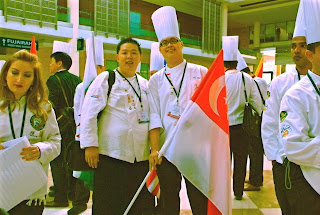
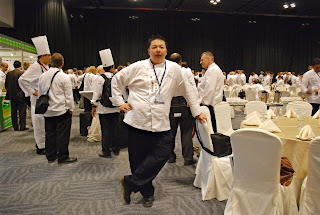
(With Elvin, Singapore Junior Chefs Club) (Congress Main Dinning Hall)

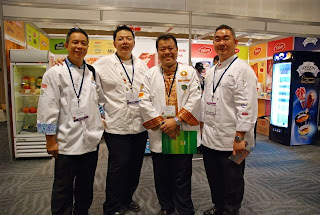
(Arabic welcome with rotan, chanting and drums) (SG/Msian Chefs, Peter,Me, Audee and Yen (SG))


(Our Mongolian friends in WACS for the first time!) (Outgoing President F. Metz delivers his last address)


(Team Singapore making our Presidium Bid ppt.) (86 countries in attendance)
Congress Day 2:
Countries Pitching to be the host for WACS congress 2012: India, Sri Lanka, South Korea, Portugal


(S Korean team with Da Chang Jin as part of their pitch) (India Delegation making presentation)


(Anxiety before results) (South Korea wins the bid to be host for 2012)
 (I was tasked to lead the congress in observing a moment of silence in respect to victims of the China Sichuan Earthquake)
Congress Day 3: We lost the bid to Iceland


(Chef Eric Teo having a light moment with our Junior Chefs) (One of the best souvenir pictures)
Coming up next.... all the desert grub we had for the 5 days!
Though Team Singapore did not win the WACS Presidium, nonetheless we did won much respect and a name for ourselves from the 86 other countries who saw our close fight in the the pitch against the team from Iceland. For me, the experience of wearing national colours once again in such a international prestige event has been a learning experience on public speaking, handling of media and building up new network of friendships with chefs from around the world.
Some of the main highlights on the Congress:
Congress Opening Day 1


(With Elvin, Singapore Junior Chefs Club) (Congress Main Dinning Hall)


(Arabic welcome with rotan, chanting and drums) (SG/Msian Chefs, Peter,Me, Audee and Yen (SG))


(Our Mongolian friends in WACS for the first time!) (Outgoing President F. Metz delivers his last address)


(Team Singapore making our Presidium Bid ppt.) (86 countries in attendance)
Congress Day 2:
Countries Pitching to be the host for WACS congress 2012: India, Sri Lanka, South Korea, Portugal


(S Korean team with Da Chang Jin as part of their pitch) (India Delegation making presentation)


(Anxiety before results) (South Korea wins the bid to be host for 2012)
(I was tasked to lead the congress in observing a moment of silence in respect to victims of the China Sichuan Earthquake)Congress Day 3: We lost the bid to Iceland


(Chef Eric Teo having a light moment with our Junior Chefs) (One of the best souvenir pictures)

Chefs Anderson Ho and Tiffany Yeo representing Singapore for the Global Chefs Challenge, we pulled in the best media prize for this event!!

Coming up next.... all the desert grub we had for the 5 days!
Subscribe to:
Posts (Atom)




.jpg)